Create your first route in minutes
Your dispatch panel, driver app, and proof of delivery — all in one place.
Start your 7-day free trialThis post is also available in 简体中文 and 繁体中文.
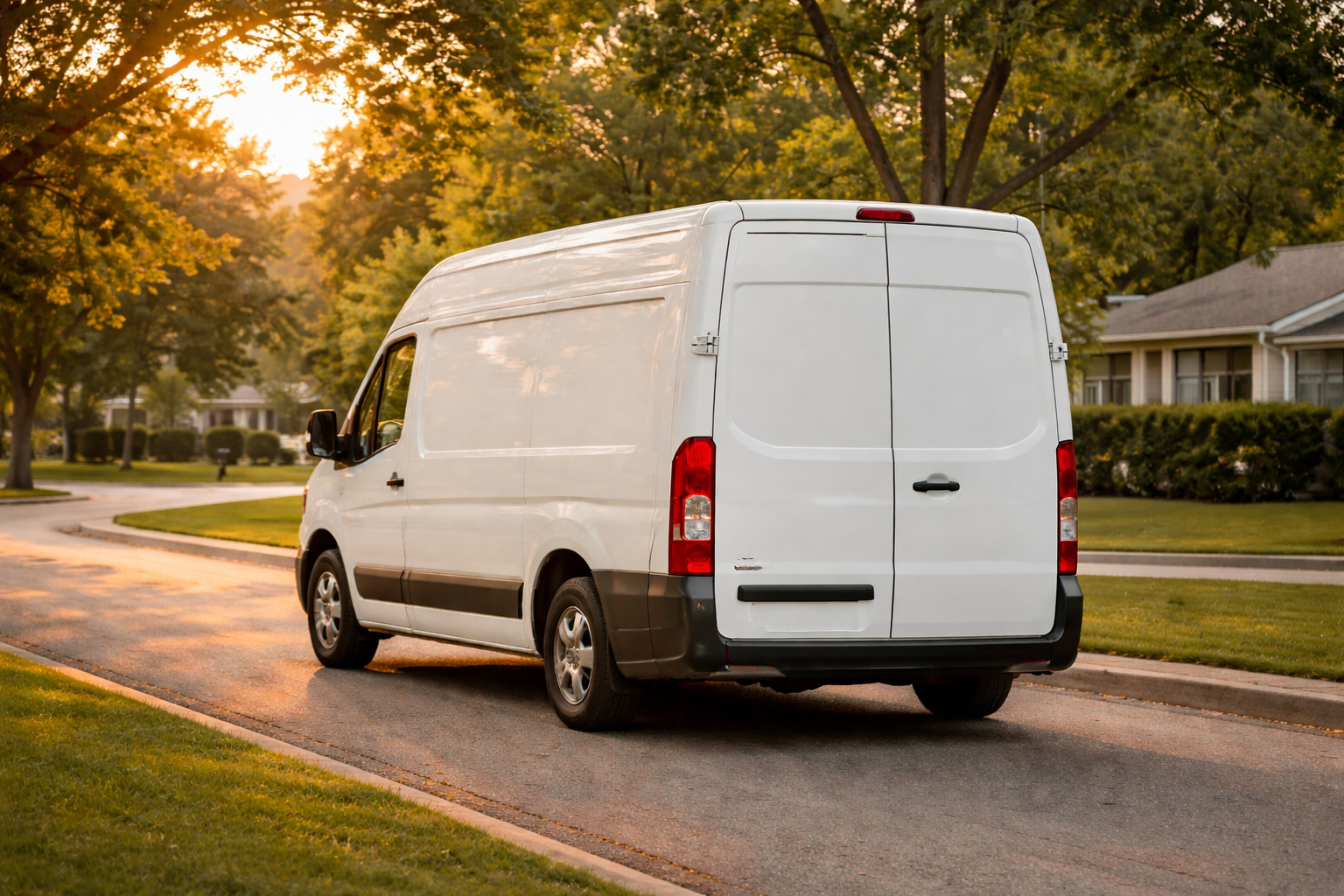
On March 17, 2026, Amazon quietly rolled out two new delivery tiers across the United States: 1-hour delivery in hundreds of cities and 3-hour delivery in over 2,000 cities and towns. More than 90,000 products are now eligible, covering everything from pantry staples to over-the-counter medications.
The news landed on CNBC, TechCrunch, and CBS News within the same day. The message was clear: the speed bar just moved again.
If you run an independent delivery operation, whether that's a courier team, a local logistics company, or a small fleet, this probably raised a question: how do we compete with that?
The short answer: you don't try to match Amazon's speed. You play a different game entirely.
What Amazon Actually Announced
Let's separate the headlines from the details.
According to Amazon's own announcement, the new tiers come with additional fees on top of Prime membership. One-hour delivery costs extra, and three-hour delivery costs extra. These are not free services. They are premium add-ons.
The eligible product range is also limited. The 90,000 items cover everyday essentials, not the full Amazon catalog. The service is powered by Amazon's existing network of fulfillment centers and delivery stations, infrastructure that took over a decade and billions of dollars to build.
This isn't something a 5-van operation can or should try to replicate. But that doesn't mean the news is irrelevant to you.
Why This Still Matters for Independent Operators
Amazon doesn't compete with you directly in most cases. If you're delivering flowers, running pharmacy prescriptions, hauling building materials, or handling B2B distribution, Amazon's 1-hour grocery run isn't taking your customers.
But Amazon shapes customer expectations. Every time a consumer gets a package in under three hours, their mental benchmark for "fast delivery" resets. That expectation bleeds into every other delivery interaction they have, including their interactions with your service.
Here's what's already shifting:
Delivery time windows are compressing. Customers who once accepted "sometime between 9 and 5" now expect a 2-hour window at most.
Real-time tracking is assumed. If Amazon shows a live map with the driver's location, your customers will wonder why you can't.
Communication is expected. Automated ETA notifications, proof of delivery photos, and status updates are becoming table stakes.
The risk isn't that Amazon steals your customers. It's that Amazon trains your customers to expect more from everyone, including you.
The Independent Operator's Actual Advantages

Here's what most coverage of Amazon's announcement misses: speed is not the only thing customers value.
Independent delivery teams have structural advantages that Amazon's massive network simply cannot replicate:
Flexibility
Amazon runs on rigid, algorithm-assigned routes through a centralized system. If a customer calls and says "actually, can you come after 3pm instead?", that request goes into a queue and maybe gets handled.
When you're running a 10-driver fleet, your dispatcher picks up the phone, adjusts the route, and the driver gets an updated sequence in minutes. That responsiveness is worth more than raw speed for many B2B customers.
Local Knowledge
Your drivers know that the loading dock at Building C is around the back, that the cafe on George Street closes early on Wednesdays, and that the construction on 5th Avenue adds 15 minutes in the afternoon. This kind of knowledge doesn't live in any algorithm. It lives in your team.
Relationship-Based Service
Amazon delivers packages. You deliver relationships. For recurring B2B customers like restaurants, pharmacies, retailers, and wholesalers, the driver who shows up every Tuesday and knows where to leave the delivery without being asked is irreplaceable. That consistency builds retention in ways that 1-hour delivery never will.
Specialized Handling
Fragile goods, temperature-sensitive items, oversized cargo, installation-required deliveries. These are categories where Amazon's standardized process breaks down and where independent operators thrive.
Where You Actually Need to Improve
Advantages only matter if you execute well. And honestly, many independent operations are leaving money on the table in areas that are entirely within their control.
Route Efficiency
If your drivers are still planning routes manually or using basic navigation apps, you're likely driving 15-25% more kilometres than necessary every single day. That's not a guess. It's what industry research consistently shows.
At current fuel prices, those extra kilometres add up fast. A fleet of 5 vehicles wasting just 10 km per vehicle per day burns through thousands of dollars a year in fuel alone, and that's before you count the extra hours, tyre wear, and maintenance.
Route optimization software solves this by computing the most efficient stop sequence across all your deliveries, factoring in time windows, vehicle capacity, and real-time traffic.
Capacity Utilization
Amazon delivered 6.7 billion packages last year by obsessing over vehicle utilization. Every van is full. Every route is dense.
Independent operators often run partially loaded vehicles because orders aren't clustered efficiently. Better route planning naturally improves load density. When stops are grouped geographically, each vehicle handles more deliveries per run.
Customer Communication
You don't need Amazon's infrastructure to send an automated text that says "Your delivery is 3 stops away." Modern route planning tools include driver tracking and customer notifications out of the box. If you're not using these features, you're falling behind on an expectation Amazon has already set.
The Numbers That Matter
Let's be specific about what good route optimization delivers for a typical independent fleet:
| Metric | Before Optimization | After Optimization |
|---|---|---|
| Average daily distance per driver | 150 km | 115-125 km |
| Stops completed per driver per day | 25-30 | 35-45 |
| Fuel cost per delivery | High | 20-30% lower |
| Failed delivery rate | 8-12% | Under 5% |
| Customer complaints about timing | Frequent | Rare |
These aren't theoretical numbers. They're the kind of improvements that delivery businesses consistently report after switching from manual planning to algorithmic optimization.
What to Do This Week
You don't need to rebuild your operation overnight. But if Amazon's announcement is a wake-up call, here are concrete steps you can take right now:
1. Audit your current routes. Take one day's worth of completed routes and plot them on a map. Look for zigzag patterns, unnecessary backtracking, and overlap between drivers. If you spot these, you have room to improve.
2. Calculate your cost per delivery. Divide your total daily operating cost (fuel + driver wages + vehicle costs) by the number of deliveries completed. This is your baseline. Any improvement to route efficiency directly lowers this number.
3. Try route optimization software. Most platforms offer free trials. Import your stop list, let the algorithm sequence it, and compare the result against your manually planned route. The difference is usually obvious on the first try.
4. Set up customer notifications. If your current system doesn't support automated ETAs and proof of delivery, that should be your next upgrade. This is the single fastest way to close the expectation gap Amazon has created.
5. Double down on what Amazon can't do. Talk to your top 10 customers. Ask what they value most about your service. You'll almost certainly hear: reliability, flexibility, personal communication. Build your operations around reinforcing those strengths.
Final Thoughts
Amazon launching 1-hour delivery isn't a death sentence for independent operators. It's a signal that the delivery industry's baseline expectations are rising, and they're not going back down.
The operators who will thrive aren't the ones trying to out-Amazon Amazon. They're the ones who combine their natural advantages (flexibility, local expertise, personal service) with the operational efficiency that modern route planning tools provide.
You don't need a billion-dollar logistics network. You need smart routes, full vehicles, and customers who trust you. The rest is execution.
Ready to see how much more efficient your routes could be? Try iDirect and optimize your first route in minutes.
This article references publicly available news reports and company announcements as of March 24, 2026. Amazon, Prime, and related service names are trademarks of Amazon.com, Inc. This article is not affiliated with, endorsed by, or sponsored by Amazon. All third-party trademarks are the property of their respective owners. Sources include CNBC, TechCrunch, CBS News, and Amazon's public newsroom.
Written by