Create your first route in minutes
Your dispatch panel, driver app, and proof of delivery — all in one place.
Start your 7-day free trialThis post is also available in 简体中文 and 繁体中文.
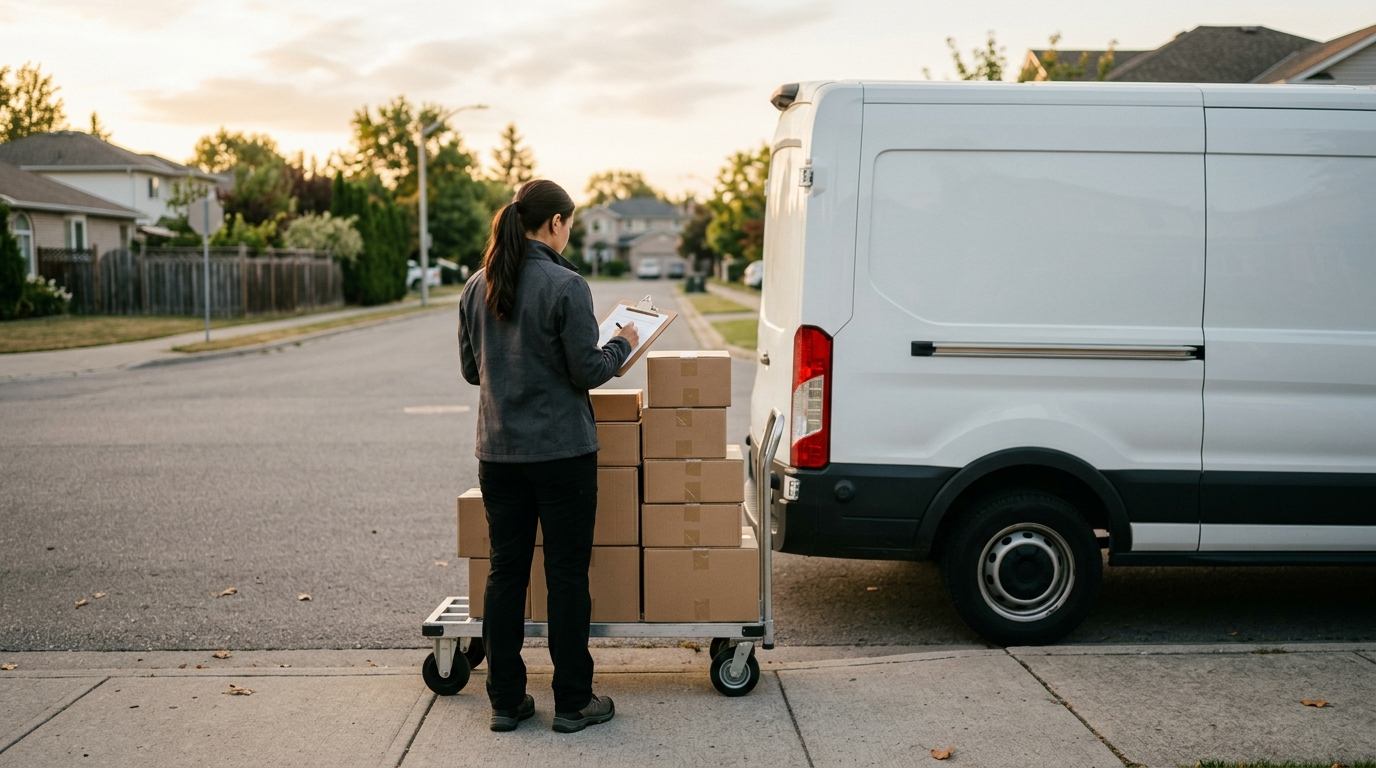
The delivery industry is not slowing down. Global e-commerce sales continue to climb, and consumer expectations around speed and convenience have permanently shifted. Same-day and next-day delivery are no longer premium options -- they are the baseline. This has created enormous demand for last-mile delivery services, and it is a demand that large carriers alone cannot meet.
If you have been thinking about starting a delivery business, the timing is strong. But like any business, getting it right requires planning, not just enthusiasm. This guide walks through the practical steps to launch, operate, and grow a delivery business in 2026.
Why Delivery Businesses Are Growing
Three forces are driving growth in the delivery sector:
E-commerce volume keeps rising. Online shopping now accounts for a significant share of total retail sales across markets like the US, Canada, and Australia. Every online order needs to reach a doorstep, and most retailers do not run their own delivery fleets.
Last-mile delivery is the bottleneck. The final leg of a shipment -- from a local hub to the customer's door -- is the most expensive and logistically challenging part of the supply chain. Large logistics companies actively seek smaller, local partners to handle this work.
Consumer expectations are higher than ever. Customers want narrow delivery windows, real-time tracking, and reliable service. Businesses that can deliver on these promises have a real competitive advantage.
For independent operators, this means opportunity. You do not need a fleet of fifty vehicles to get started. Many successful delivery businesses begin with a single van and a well-defined niche.
Step 1: Choose Your Niche
"Delivery" is a broad category. The more specific you are about what you deliver and to whom, the easier it is to market your services and operate efficiently.
Some niches worth considering:
1. Pharmacy and medical deliveries. Prescription and medical supply delivery is time-sensitive and often requires reliable, background-checked drivers. Margins tend to be solid because reliability matters more than price.
2. Grocery and meal delivery. Partnering with local grocery stores or meal prep companies that want their own branded delivery rather than relying on third-party apps.
3. Business-to-business (B2B) deliveries. Office supplies, parts, documents, or samples between businesses. B2B clients tend to be more predictable and offer recurring contracts.
4. Furniture and large-item delivery. Requires larger vehicles but commands higher per-delivery fees. Many online furniture retailers outsource delivery entirely.
5. E-commerce last-mile contracts. Working as a delivery service partner for major e-commerce platforms or regional carriers.
Pick a niche where you understand the customer's pain points. If you have experience in a particular industry, that is a significant advantage.
Step 2: Register Your Business and Handle the Legal Side
This step is not glamorous, but skipping it causes real problems later.
1. Register your business entity. Depending on your location, this might be a sole trader registration, an LLC, or a proprietary limited company. Choose a structure that protects your personal assets.
2. Get an ABN, EIN, or equivalent. You will need a tax identifier to invoice clients and file taxes.
3. Obtain necessary licences. Some jurisdictions require specific licences for commercial delivery operations. Check with your local council or government authority.
4. Set up a business bank account. Keep personal and business finances separate from day one. It makes accounting, tax, and eventually selling or scaling the business far simpler.
Step 3: Sort Out Your Vehicles and Insurance
Your vehicle choice depends entirely on your niche. A pharmacy delivery service can run on hatchbacks. A furniture delivery business needs vans or small trucks.
Buying vs. leasing: Leasing keeps your upfront costs lower and lets you upgrade as your needs change. Buying gives you an asset and lower long-term costs. Many operators start with a lease and buy once they have steady revenue.
Insurance is non-negotiable. You need:
1. Commercial vehicle insurance (personal auto policies will not cover business use)
2. Public liability insurance
3. Goods-in-transit insurance (covers the items you are transporting)
4. Workers' compensation if you hire drivers
Talk to an insurance broker who specialises in commercial delivery. The right coverage protects you from a single incident that could otherwise shut down your business.
Step 4: Find Customers and Secure Contracts
This is where most new delivery businesses struggle. Having a van and a driver is not enough -- you need consistent work.
Approach local businesses directly. Walk into pharmacies, florists, bakeries, auto parts stores, and any business that ships or delivers products. Many of them are using expensive courier services or unreliable ad-hoc solutions. Offer a better price, a dedicated service, or both.
Bid on delivery contracts. Many e-commerce companies, retailers, and logistics providers post contract opportunities. Check industry job boards, government procurement portals, and platforms that connect shippers with carriers.
Partner with existing logistics companies. Larger carriers often subcontract last-mile deliveries to local operators, especially in suburban and regional areas. Reach out to regional logistics companies and ask about subcontracting opportunities.
Build relationships, not just transactions. In the delivery business, reliability is your biggest selling point. Show up on time, communicate proactively when issues arise, and make it easy for clients to work with you. Referrals from satisfied clients will become your best source of new business.
Start small and prove your model. You do not need twenty clients on day one. Start with two or three reliable contracts, deliver exceptional service, and grow from there.
Step 5: Set Up Your Operations
Once you have clients, you need systems to manage the work efficiently. Running a delivery business on spreadsheets and text messages works for the first week. After that, it becomes a liability.
Essential tools and software:
Route planning and optimisation software. This is the single most impactful tool for a delivery business. Manually planning routes for even ten stops is inefficient. Good route planning software considers traffic, delivery windows, vehicle capacity, and driver schedules to create optimised routes that save fuel and time.
Proof of delivery (POD) system. Clients want confirmation that deliveries were completed. A system that captures photos, signatures, and timestamps at each stop protects you from disputes and builds trust with clients.
Fleet management and tracking. Even with a small fleet, knowing where your drivers are in real time helps you respond to client enquiries, reroute when issues come up, and monitor performance.
Accounting and invoicing software. Xero, QuickBooks, or similar. Automate your invoicing so you are not chasing payments manually.
Communication tools. A simple group chat or messaging system for coordinating with drivers. Keep it separate from personal messaging.
How route optimisation helps you scale
Route optimisation is not just about saving a few minutes per stop. The compounding effect is significant:
1. Fuel savings of 20-30% when routes are properly optimised versus manually planned.
2. More deliveries per driver per day. An optimised route might fit 15-20% more stops into the same working hours.
3. Lower driver fatigue and turnover. Drivers who finish on time with logical routes are more satisfied and stay longer.
Better customer experience. Tighter, more accurate delivery windows mean happier customers and fewer missed deliveries.
When you are running a handful of deliveries, you can wing it. When you are running fifty or a hundred stops a day across multiple drivers, optimisation is the difference between profit and loss.
Try iDirect -- it is a route planner built for delivery businesses that need to plan multi-stop routes quickly and keep drivers on track.
Common Mistakes to Avoid
Underpricing your services. New delivery businesses often price too low to win contracts. Calculate your true costs -- fuel, insurance, vehicle wear, labour, admin time -- and price for sustainability, not just competitiveness. A contract that loses you money is worse than no contract at all.
Ignoring vehicle maintenance. A breakdown during deliveries damages your reputation and costs more than preventive maintenance ever would. Set a maintenance schedule and stick to it.
Not having written contracts. Handshake deals feel friendly until there is a dispute about payment terms, liability, or service expectations. Get everything in writing.
Growing too fast. Adding drivers and vehicles before your revenue is stable creates cash flow problems. Grow in step with confirmed, recurring revenue.
Neglecting technology. Some operators resist investing in software, seeing it as an unnecessary cost. In practice, the right tools pay for themselves within weeks through fuel savings, time efficiency, and fewer errors.
Poor communication with clients. When a delivery is late or an issue comes up, proactive communication is everything. Clients can handle problems; they cannot handle silence.
Scaling Your Delivery Business
Once your operation is running smoothly with a few drivers, scaling becomes the next challenge. Here is what that looks like:
Hire drivers carefully. Your drivers are the face of your business. Look for reliability and professionalism over experience. A good attitude and a clean driving record matter more than years in logistics.
Standardise your processes. Document how routes are planned, how drivers handle exceptions, how proof of delivery is captured, and how client issues are resolved. Consistency is what lets you scale without quality dropping.
Invest in route optimisation software. What works with three drivers and thirty stops does not work with ten drivers and two hundred stops. Software like iDirect lets you plan optimised routes for multiple drivers in minutes, not hours, and adjust on the fly when things change.
Get started with iDirect to see how route optimisation can improve your delivery operations.
Track your numbers. Cost per delivery, on-time rate, fuel cost per kilometre, customer satisfaction scores. You cannot improve what you do not measure.
Diversify your client base. Relying on a single large client is risky. Aim for a mix of clients so that losing one does not threaten your entire operation.
Final Thoughts
Starting a delivery business is straightforward in concept and demanding in execution. The opportunity is real -- businesses and consumers need reliable delivery more than ever. But success comes from disciplined planning, smart use of technology, and a relentless focus on service quality.
Start with a clear niche, keep your costs under control, invest in the right tools from day one, and build your reputation through consistent, reliable service. The delivery businesses that thrive are the ones that treat every delivery as a chance to prove their value.
Written by