Create your first route in minutes
Your dispatch panel, driver app, and proof of delivery — all in one place.
Start your 7-day free trialThis post is also available in 简体中文 and 繁体中文.
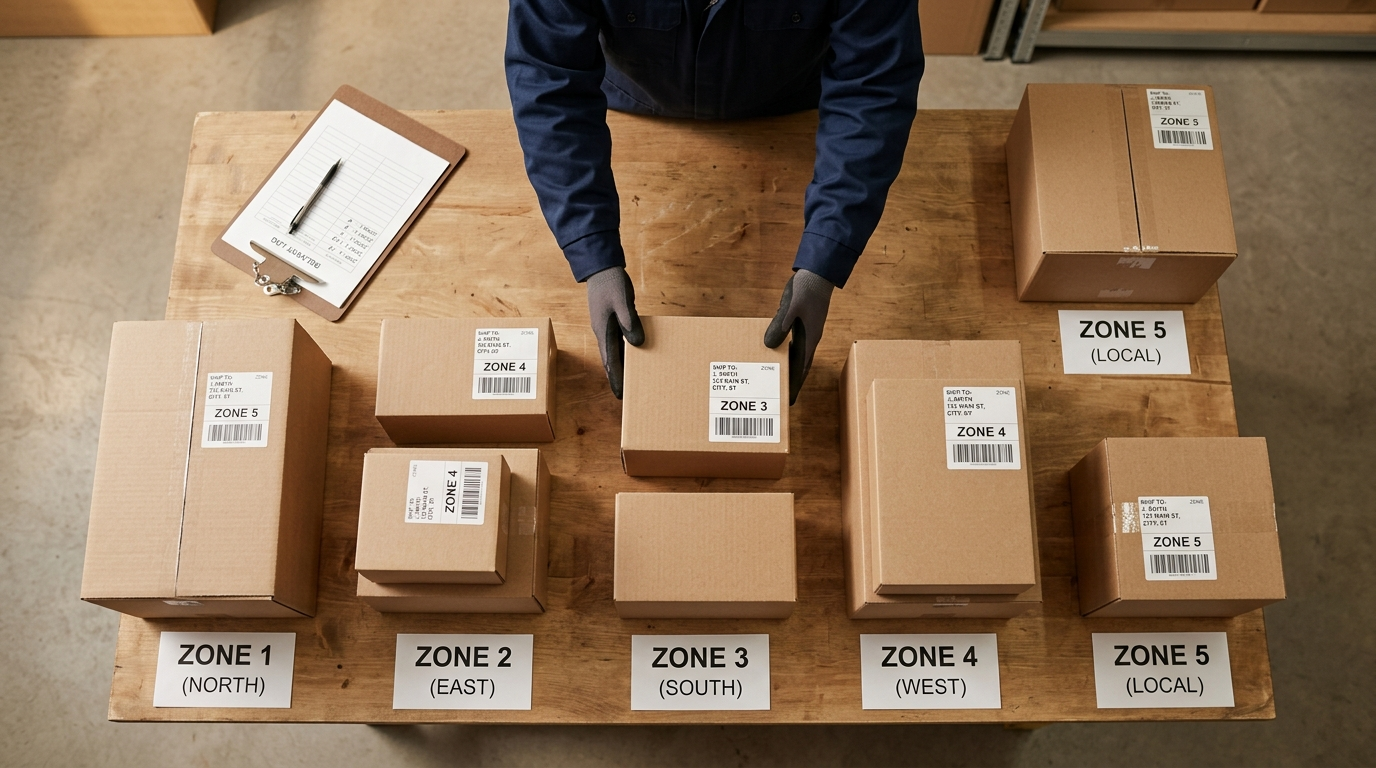
Last mile delivery -- the final leg from a distribution hub to the customer's doorstep -- is the most expensive part of the entire supply chain. According to industry research, it accounts for roughly 53% of total shipping costs. For a business spending $200,000 a year on logistics, that means over $100,000 is burned just getting packages from the warehouse to the front door.
The problem is getting worse, not better. Customer expectations keep rising: same-day delivery, narrow time windows, real-time tracking. Meanwhile, fuel prices fluctuate, driver wages increase, and failed deliveries eat into margins. A single failed delivery attempt can cost between $12 and $20 when you factor in the return trip, re-scheduling, and customer service time.
But here is the good news: last mile costs are not fixed. With the right strategies, delivery businesses routinely cut their last mile expenses by 20-40%. Below are seven proven approaches that work whether you are running 5 vehicles or 50.
1. Optimise Your Routes -- Every Single Day
The most direct way to reduce delivery costs is to shorten the distance your drivers travel. It sounds obvious, but most delivery operations still rely on driver experience or basic map directions to plan routes. The result is typically 15-30% more mileage than necessary.
Proper route optimisation considers multiple factors simultaneously: delivery locations, time windows, vehicle capacity, traffic patterns, and driver schedules. A route that looks efficient on a map might be terrible in practice if it sends a driver through a congested area during peak hour.
The numbers matter. If a driver covers 150 km per day and you can reduce that by 20%, you save 30 km daily. At $0.50 per kilometre in fuel and wear, that is $15 per driver per day. With 10 drivers working 250 days a year, the savings add up to $37,500 annually -- just from smarter routing.
Route optimisation also reduces overtime. When drivers finish their routes faster, they are less likely to run into overtime hours, which typically cost 1.5x the regular wage.
2. Increase Delivery Density by Batching Orders by Zone
Delivery density -- the number of stops per square kilometre -- is one of the biggest levers for cost reduction. A driver making 8 deliveries in one suburb is dramatically more efficient than a driver making 8 deliveries scattered across four suburbs.
How to increase density:
-Group orders by geographic zone. Rather than dispatching orders first-come-first-served, hold orders for a few hours and batch them by area. A customer who orders at 9am and another at 11am in the same neighbourhood should go on the same route.
-Offer delivery day preferences by area. Serve the northern suburbs on Monday and Wednesday, southern suburbs on Tuesday and Thursday. Customers get predictability, and you get density.
-Use zone-based pricing. Charge less for deliveries in high-density areas and more for remote drops. This naturally steers volume toward efficient zones.
A delivery operation that increases its average stops per route from 15 to 22 can reduce cost-per-delivery by 30% or more, because fixed costs (the driver's wage, the vehicle lease) are spread across more drops.
3. Reduce Failed Deliveries Through Better Communication
Failed deliveries are a hidden cost killer. Industry data shows that 6-10% of first delivery attempts fail, and each failure costs $12-$20 in direct expenses. For a company doing 500 deliveries per day, that is 30-50 failures daily, costing $360-$1,000 every single day.
Practical ways to cut failure rates:
- Send delivery notifications with time windows. A simple SMS saying "Your delivery will arrive between 2pm and 4pm" gives the customer time to arrange someone to be home. This alone can reduce failures by 30-40%.
- Offer real-time driver tracking. When customers can see the driver is 10 minutes away, they are far more likely to be available.
- Allow customers to reschedule before the attempt. If a customer knows they will not be home, let them move the delivery to tomorrow before your driver wastes a trip.
- Provide safe-drop instructions. Many failed deliveries happen because the driver cannot find a safe place to leave the package. Let customers specify "leave at back door" or "leave with neighbour at unit 3."
Reducing your failure rate from 8% to 3% on 500 daily deliveries saves approximately 25 re-delivery trips per day. At $15 per failed delivery, that is $375 per day or over $90,000 per year.
4. Right-Size Your Fleet
Many delivery businesses default to using the same vehicle type for every job. But sending a large van to deliver a single small parcel is wasteful, and overloading a small vehicle leads to extra trips.
Fleet right-sizing means matching vehicles to the actual job:
- Audit your delivery profiles. Track package sizes and weights for a month. You might find that 60% of your deliveries could fit in a compact car or cargo bike, while only 10% genuinely need a large van.
- Mix your fleet. A combination of small cars for light parcels, mid-size vans for standard loads, and large vehicles for bulky items can reduce fuel costs by 15-25% compared to an all-van fleet.
- Calculate break-even points. A small car costs roughly $0.25/km to operate, while a large van costs $0.55/km. If 40% of your routes can use the smaller vehicle, the savings are significant.
- Consider electric vehicles for urban routes. EVs have lower per-kilometre running costs ($0.04-$0.08/km vs $0.12-$0.18/km for fuel). Short urban routes with frequent stops are ideal for EVs since regenerative braking maximises efficiency.
Do not over-invest in capacity "just in case." It is cheaper to outsource occasional overflow to a contractor than to maintain a fleet sized for peak demand 365 days a year.
5. Use Proof of Delivery to Reduce Disputes and Chargebacks
Every disputed delivery costs money -- not just the refund or replacement, but the customer service time, investigation effort, and potential chargeback fees. For e-commerce businesses, delivery disputes can account for 1-3% of revenue.
A solid proof of delivery (POD) system pays for itself:
- Photo proof at the door. Drivers take a photo showing the package at the delivery location. This resolves 80%+ of "I never received it" disputes instantly.
- GPS-stamped delivery confirmation. Recording the exact coordinates and time of delivery provides objective evidence that the driver was at the correct address.
- Customer signature capture. For high-value items, digital signatures on a mobile device provide legal-grade proof of receipt.
- Automatic POD sharing. Send the delivery photo to the customer immediately. This builds trust and pre-empts disputes before they even start.
One mid-size delivery company reported that implementing photo POD reduced their disputed deliveries by 65% and saved over $40,000 per year in refunds and chargeback fees.
6. Analyse Delivery Data to Find Inefficiencies
You cannot improve what you do not measure. Yet many delivery operations run on gut feeling rather than data. Tracking the right metrics reveals where money is being wasted.
Key metrics to track:
- Cost per delivery. Total daily costs divided by total deliveries. Track this weekly and look for trends.
- Deliveries per hour per driver. This reveals driver efficiency and route quality. If one driver consistently completes 4 deliveries per hour while others manage 2.5, study what they are doing differently.
- First-attempt delivery rate. Track this by area, time slot, and customer type. You might discover that deliveries to certain apartment complexes always fail, suggesting you need a different approach for those locations.
- Distance per delivery. If this number is creeping up, your routes are getting less efficient, likely due to lower density or poor planning.
- Vehicle utilisation rate. A van that goes out half-empty every day is a van you might not need.
Review this data monthly. Even small improvements compound over time. A 5% improvement in deliveries-per-hour across your entire operation can eliminate the need for an additional driver, saving $50,000-$70,000 per year in wages and vehicle costs.
7. Automate Dispatch and Driver Assignment
Manual dispatch -- where a coordinator assigns drivers to routes based on experience and guesswork -- is slow, inconsistent, and does not scale. When you are managing more than 3-4 drivers, the complexity of optimal assignment exceeds what a human can reliably handle.
What automated dispatch solves:
- Driver-route matching. Automatically assign drivers based on their location, vehicle type, capacity, and scheduled hours. A driver who lives near the first stop saves 20 minutes of dead-head driving.
- Dynamic re-routing. When a new urgent order comes in or a delivery fails, the system can re-assign it to the nearest available driver rather than sending someone back across town.
- Balanced workloads. Automation distributes stops evenly so no driver is overloaded while another finishes early. This reduces overtime and improves driver satisfaction.
- Faster planning. What takes a dispatcher 45 minutes to plan manually can be computed in seconds. That frees up your coordinator for higher-value tasks like managing exceptions and customer escalations.
Companies that switch from manual to automated dispatch typically see a 15-20% reduction in total route time and a significant drop in planning overhead.
How iDirect Helps You Cut Last Mile Costs
iDirect is built specifically for delivery teams that need to reduce costs without adding complexity. It combines route optimisation, real-time tracking, proof of delivery, and delivery analytics in one tool that drivers and dispatchers can start using in minutes.
Instead of juggling separate apps for routing, tracking, and proof of delivery, iDirect handles the entire delivery workflow. Plan optimised multi-stop routes, track driver progress in real time, capture photo proof at every stop, and review performance data to find savings -- all from a single platform.
Whether you are a solo courier or managing a fleet of 30 drivers, the maths is straightforward: smarter routes, fewer failed deliveries, and better data lead directly to lower costs per delivery.
Try iDirect Free and see how much you can save on your last mile operations.
The Bottom Line
Last mile delivery costs are high, but they are not untouchable. The seven strategies above -- route optimisation, delivery density, failure reduction, fleet right-sizing, proof of delivery, data analysis, and automated dispatch -- each contribute meaningful savings on their own. Combined, they can reduce your last mile costs by 25-40%.
Start with the strategy that addresses your biggest pain point. If your drivers are covering excessive kilometres, start with route optimisation. If your failure rate is above 5%, focus on customer communication. If you are planning routes manually, automate it.
The businesses that thrive in delivery are not necessarily the ones with the most vehicles or the lowest prices. They are the ones that operate most efficiently -- delivering more packages with fewer kilometres, fewer failures, and fewer wasted hours.
Written by