Create your first route in minutes
Your dispatch panel, driver app, and proof of delivery — all in one place.
Start your 7-day free trialThis post is also available in 简体中文 and 繁体中文.
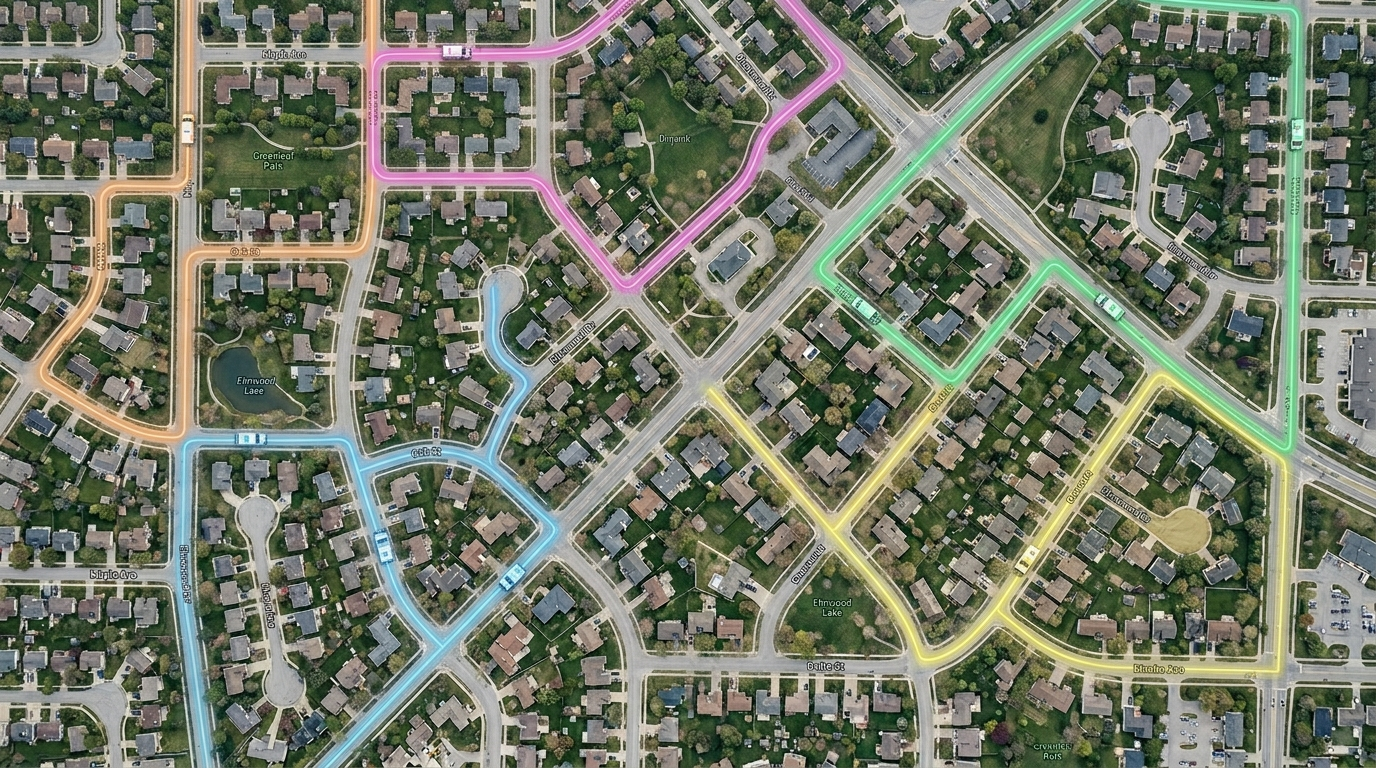
Why Route Optimization Matters
For delivery businesses, fuel and labor represent the two largest operational expenses. A well-optimized route can reduce total driving distance by 20-30%, which directly lowers fuel spend and allows each driver to complete more deliveries per day.
Despite this, many small and mid-sized fleets still rely on manual route planning or basic GPS navigation. Below are five practical tips to help you get more out of every route.
1. Cluster Deliveries by Geography
Before fine-tuning individual routes, start by grouping orders into geographic clusters. This prevents drivers from zigzagging across overlapping areas and keeps each route within a tight region.
How to apply this:
- Segment your service area into logical zones by suburb or postal code
- Assign each zone to a dedicated driver or route
- Use polygon-based tools to visually allocate orders to zones, then run optimization within each zone
2. Factor in Time Windows
Not every delivery has the same urgency. Some customers require delivery within a strict window (e.g., a restaurant that needs stock before the lunch rush), while others are more flexible.
Best practices:
- Schedule time-sensitive stops early in the route
- Batch flexible deliveries together to give the optimizer more room to find efficient sequences
- Add buffer time between back-to-back tight windows to prevent cascading delays
3. Optimize Stop Sequence, Not Just Distance
The shortest path on a map is not always the fastest in practice. Traffic patterns, turn restrictions, and road conditions all influence actual travel time.
Things to keep in mind:
- Favor right turns over left turns at intersections to reduce wait time
- Steer clear of school zones during drop-off and pick-up hours
- Account for highway on-ramps when planning routes between suburban and urban areas
- Incorporate real-time traffic data whenever possible
4. Right-Size Your Fleet
Running too many drivers leads to underutilized vehicles and unnecessary labor costs. Too few drivers means overtime expenses and missed delivery windows.
How to find the balance:
- Review your order volume trends over the past 3-6 months
- Identify peak days and size your core fleet around average demand
- Bring in on-demand drivers during surges instead of carrying excess capacity year-round
- Monitor deliveries-per-driver as a key efficiency benchmark
5. Use Proof of Delivery Data to Improve Over Time
Route optimization is not a set-it-and-forget-it task. The real gains come from using delivery data to refine your approach continuously.
Key metrics to monitor:
- Actual vs. planned arrival time at each stop
- Failed delivery rates broken down by area and time slot
- Driver idle time and deviations from planned routes
- Customer satisfaction correlated with delivery timing
Reviewing these metrics on a weekly basis helps you spot patterns and fine-tune your planning parameters over time.
Getting Started
Modern route planning tools like iDirect automate many of these strategies out of the box. With algorithm-driven optimization, real-time tracking, and built-in analytics, you can begin reducing delivery costs from day one.
The key is to start with your own data, establish a baseline, and iterate. Even modest improvements in route efficiency add up quickly across hundreds of deliveries each month.
Written by