Create your first route in minutes
Your dispatch panel, driver app, and proof of delivery — all in one place.
Start your 7-day free trialThis post is also available in 简体中文 and 繁体中文.
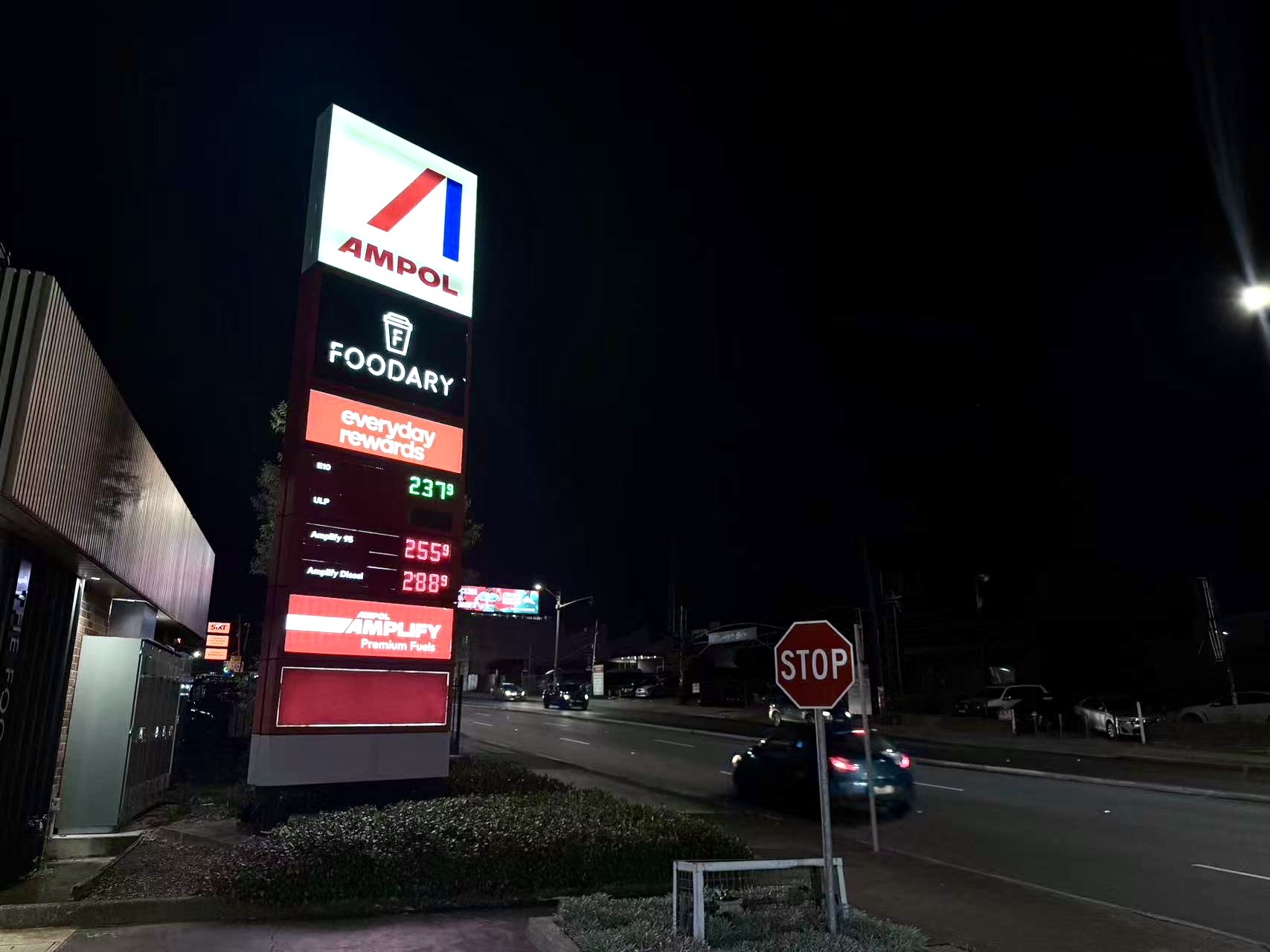
Last Wednesday evening, I pulled into an Ampol servo near Burwood, Sydney to fill up. E10 was sitting at 237.9 cpl, 95 octane at 255.9 cpl, and diesel at 288.9 cpl. I watched the pump tick over -- 38 litres of 98 octane came to $101.85.
In that moment, the thought that crossed my mind wasn't "petrol is expensive." It was: if I were driving a diesel delivery truck doing runs all day, would one tank even last me a full shift?

Filling Up in Australia Has Become an Anxious Experience
The situation is clear enough. Iran's blockade of the Strait of Hormuz has thrown global crude supply chains into chaos. Australia imports **80% of its refined fuel** from Asian refineries -- the supply route hit hardest by the disruption.
The consequences have been immediate:
As of March 19, most servos across Sydney's Inner West are posting diesel at 288.9 cpl, with some stations hitting 299.6 cpl -- just 0.4 cents short of $3.00 (source: NSW FuelCheck live prices)
The ACCC's March 13 monitoring report put Sydney's average diesel at 271 cpl, up nearly 50% from two years ago -- and the real street price has already blown past that
The country has roughly **36 days of petrol reserves and 32 days of diesel** left
The federal government has released 800 million litres from strategic reserves and temporarily lowered fuel quality standards to boost supply
Economists warn that in an extreme scenario, prices could reach $3.50/L
I saw someone at the station filling four 20-litre jerry cans and loading them into their boot. Panic buying at the pump is already happening.
What This Means for Fleet Operators
If you're managing a fleet, you've probably already felt your margins getting squeezed week by week.
Here's the simple maths: diesel typically represents **20%-30%** of a fleet's total operating costs (Australian Trucking Association data). When diesel jumps from $1.80 to today's street price of $2.89, that percentage can easily push past 35%.
Let's get specific:
A mid-size delivery truck uses about 15 litres per 100km
At the current mainstream price of $2.89/L, that's $0.43 per kilometre in fuel alone
If poor route planning adds just 10km of waste per vehicle per day (very common with manual planning), that's 2,500 wasted kilometres per year per vehicle
For a 5-vehicle fleet, that's over $5,400 in fuel burned for nothing
You might think $5,000 isn't catastrophic. But remember, that's just the fuel for unnecessary kilometres. Add in the extra tyre wear, maintenance, and driver hours, and the real cost roughly doubles.
"Driver Experience" Doesn't Cut It in 2026
I get it. Many business owners will say: "My driver has been running this route for ten years. He knows the way."
Nobody is dismissing the value of experience. But here's the reality -- the human brain handles sequencing 5-7 stops reasonably well. Once you're past 20 delivery points, "on the way" becomes pure intuition.
Research consistently shows that manually sequenced routes are 15%-25% longer than algorithmically optimised ones.
Two traps that catch people every time:
The "It's On the Way" Illusion
Delivering to A, you think B is "just nearby." At B, you figure C is "on the way too." By the end of the day, your route on the map looks like a massive Z-shape, 30km longer than optimal, and you had no idea.
Invisible Backtracking
Without a map view, drivers don't realise they went to western Parramatta in the morning and then doubled back to the same area in the afternoon for a single delivery. This backtracking is the real fuel killer.
Two Free Ways to Cut Fuel Costs Today
Before we talk about route planning, here are two things you can do today that cost nothing.
Fix Aggressive Driving Habits
Hard acceleration, heavy braking, and high-speed cruising are the top three fuel killers. Research shows aggressive driving wastes 15%-30% more fuel on highways and 10%-40% more in stop-and-go city traffic.
Some quick wins: idling for more than 10 seconds burns more fuel than restarting the engine; dropping cruise speed from 100 km/h to 80 km/h can cut fuel use by 15%-20%. For delivery vehicles covering hundreds of kilometres a day, simply coaching drivers to drive smoother can save thousands of dollars a year.
Don't Skip Basic Maintenance
The fuel gap between a well-maintained vehicle and one that's "running fine" is bigger than most people think. According to industry test data:
Every 1 psi drop in tyre pressure costs 0.2% more fuel -- and many delivery vehicles run chronically under-inflated. Keeping tyres properly inflated saves an average of 0.6%, and up to 3% in some cases
Using the manufacturer's recommended motor oil grade can improve fuel economy by 1%-2%
None of this is high-tech. It's fleet management basics. But at $2.89/L diesel, the return on getting the basics right is amplified.
Where the Real Savings Are: Pre-Trip Route Planning
Driving habits and maintenance can shave off a few percent, but the biggest gap comes from the route itself. A well-planned route versus one arranged "by feel" can differ by 20%-30% in total distance.
That's why more and more fleets are turning to route planning software -- not for fancy features, but simply to lock in the shortest possible route before anyone leaves the depot.
We built iDirect to solve exactly this. Here's what makes the biggest difference for fuel savings:
Route compression -- The algorithm threads dozens of scattered orders into the shortest loop. A run that used to zig-zag across 150km might come down to 120km.

Zone-based dispatching -- The system assigns orders based on geography and vehicle capacity. It won't send a van across Sydney for one small parcel; it groups orders to the driver already working that zone.
See the full picture before dispatch -- Every route is visible on the map before anyone leaves. Where are the detours? Where are the overlaps? Dispatchers spot problems before drivers hit the road, not after they call back with issues.
Final Thoughts
Honestly, we can't control the tankers in the Strait of Hormuz, and we can't predict tomorrow's AUD exchange rate. But one thing is certain -- how many kilometres your fleet needs to drive today is something you can control.
Fuel prices may keep climbing. But spending 5 minutes on smart route planning before departure and saving 15%-20% on fuel all day? That maths works every time.
Don't let your margins escape through the exhaust pipe. Try iDirect and start saving from your next run.
Data current as of March 19, 2026. Sources include NSW FuelCheck live prices, ACCC fuel monitoring reports, SBS News, and Australian Trucking Association public data.
Written by